* Quick Answer *

Mangwon Hangang Park is a quieter stretch of the Han River in Mapo-gu, popular with locals rather than tourists. It sits a five-minute walk from Mangwon Market, a working neighborhood market with some of the best street food in western Seoul. The two together make for a quarter-day itinerary that feels nothing like the typical tourist circuit.
1. Why Mangwon Over Banpo or Yeouido?

Most first-time visitors to Seoul head straight for Banpo or Yeouido when they want a Han River experience. Both are fine — but they’re also the options that show up on every travel list, which means crowds, convenience stores, and a lot of other tourists doing the same thing at the same time.
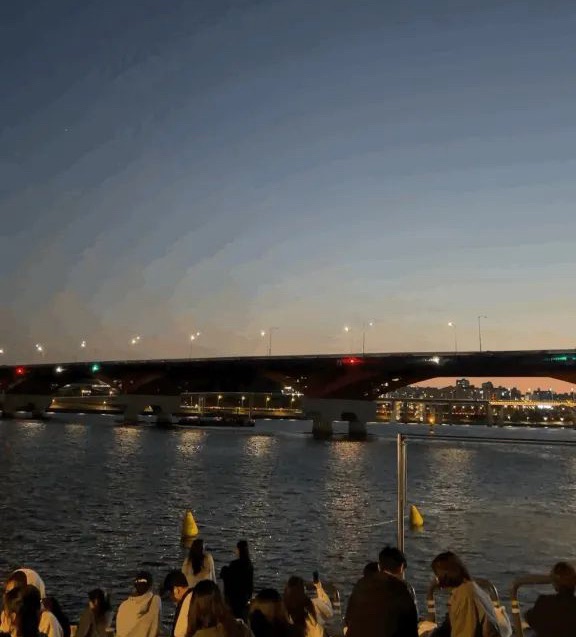
Mangwon is different. The park itself is less and more lived-in: locals play basketball on the riverside courts at night, vendors sell fruit and snacks near the entrance, and the atmosphere feels closer to a neighborhood park than a tourist destination. The Han River looks the same from here — bridges lit up, water catching the last of the daylight — but the crowd around you looks completely different.
The real draw, though, is what’s five minutes away.
2. Mangwon Market: What to Expect

Mangwon Market (망원시장) has been a neighborhood institution for decades. It’s a covered traditional market — the long arcade with the glass ceiling runs the length of the main hall — and unlike some of Seoul’s more famous markets, it hasn’t been repackaged for tourists. Prices are local, signage is mostly in Korean, and the vendors are running real businesses for the people who live nearby.
That’s exactly what makes it worth visiting.
What to Eat
1. Tteokbokki (떡볶이)

The spicy rice cake stalls are the first thing you’ll see and smell. The sauce here runs on the thicker, richer side — less watery than the convenience store version, more like something that’s been simmering since the morning. A small portion runs around 3,000–4,000 KRW.
2. Fried Chicken (통닭)

Old-school Korean fried chicken — whole birds, half birds, individual pieces — sold from stalls that have been doing the same thing for years. A half chicken (반마리) goes for around 5,000 KRW, and the legs (닭다리) are 1,000–2,000 KRW each. This isn’t the sweet-glazed Korean fried chicken you see on menus abroad. It’s crispier, more savory, and significantly less expensive.
3. Puffed Rice Snacks (뻥튀기)

One of the market’s more distinctive sounds is the machine that makes these — a loud pop every few minutes as the rice presses expand. The result is a light, airy snack that comes in sesame, plain, and a few other varieties. Sold by the bag for a few thousand won, they make a good walking snack or a souvenir that actually tastes like something.
4. Fruit Stalls

The produce section near the market entrance is worth a look even if you’re not buying. Mangoes, Korean melons (참외), apples, strawberries — sold at prices that make the supermarket markups obvious. Mango runs around 3,000 KRW per piece, Korean melon around 10,000 KRW for a box.
Practical Notes
- Hours: Most stalls open around 9 AM and close by 8–9 PM. The fried chicken stalls tend to stay open later.
- Payment: Many stalls are cash-only, though some now accept card or KakaoPay. Bring cash to be safe — the nearest ATM is at the GS25 near the market entrance.
- Crowds: Weekday afternoons are manageable. Saturday afternoons get busy. If you go on a weekend, get there before 3 PM.
3. Mangwon Hangang Park: What to Do

The park itself is straightforward — grass, a riverside path, sports courts, and a clear view of the Han. What makes it useful as part of this itinerary is the timing: the park is at its best in the late afternoon and into the evening, when the light drops and the bridges start to light up.
The Basketball Courts
There’s a covered outdoor basketball court near the waterfront that runs well into the night. It’s free, and locals — mostly in their 20s and 30s — show up to play pickup games from early evening onward. It’s the kind of scene that’s easy to walk past, worth stopping for.
The Floating Platform (망원 선착장)

There’s a multi-level commercial complex moored to the riverbank — lit up green at night, with a large LED screen facing the water. It looks more dramatic than it is up close (it’s mostly cafes and bars), but the structure itself is an interesting piece of riverfront infrastructure and photographs well after dark.
Sunset Timing

The Han River faces west from Mangwon, which means the sunset hits the water directly. The bridges reflect the last of the light for about 20–30 minutes before it goes dark, and the park fills up with people who clearly know the timing. Plan to be here by 6:30–7 PM depending on the season.
4. How to Combine Them: A Quarter-Day Itinerary
5:00 PM — Arrive at Mangwon Market
Walk the main arcade and get your bearings. Start with tteokbokki from one of the street stalls, then work your way toward the fried chicken section. Browse the fruit stalls near the entrance — the prices are worth seeing even if you’re not buying.
6:30 PM — Walk to Mangwon Hangang Park (5 min)
Head toward the river. Find a spot on the grass or along the waterfront path and eat what you picked up at the market.
9:30 PM — Sunset and Bridge Views
The Han River faces west from Mangwon, so the last light hits the water and the bridges directly. Stay until the bridges are fully lit. It gets quieter as the evening settles in — noticeably less crowded than Banpo or Yeouido at the same hour.
8:30 PM — Explore the Park
Walk along the riverside path toward the floating platform (망원 선착장), lit up green after dark. The basketball courts nearby stay busy into the night — worth a few minutes to watch.
7:30 PM — Han River Ramen
Stop by the CU or GS25 convenience store at the park entrance, grab a cup of ramen, and ask for hot water at the counter. Eating instant ramen by the Han River — 한강라면 — is one of those small rituals that Seoulites do on warm evenings. It costs around 3,500 KRW and tastes better than it has any right to next to a river view.
10:00 PM — Head Back
Loop back through the market if you want a final snack. Some stalls wind down by 9 PM, but the fried chicken and tteokbokki spots often run later.
Total time:
about 5–6 hours if you take it slowly. Easily compressed to 2–3 hours if you’re working around other plans.
5. Getting There
By Subway
Mangwon Station (망원역), Line 6 (brown line), Exit 2. From the exit, Mangwon Market is about 5 minutes on foot heading north. The park entrance is a further 10 minutes, or you can walk through the market and come out the other side closer to the river.
From central Seoul
From Hongik University Station (홍대입구역): two stops on Line 6 toward Danggogae, about 6 minutes.
From Hapjeong Station (합정역): one stop, 3 minutes.
By Bike
There’s a public bike dock (Ttareungyi) near the park entrance. If you’re already cycling along the Han River path, Mangwon Hangang Park is a natural stop between Hapjeong and Yanghwa.
6. FAQ
Is Mangwon Market tourist-friendly?
It’s navigable without Korean, but it helps to point at what you want and have small cash ready. Most vendors are used to the occasional non-Korean speaker, and Papago’s camera translation handles the menu signs reasonably well.
What’s the difference between Mangwon Market and other Seoul markets?
Mangwon hasn’t been significantly redeveloped for tourism the way Gwangjang or Tongin Market have. It’s a working neighborhood market first, which means fewer English signs and tourist-oriented stalls, but also lower prices and a more authentic atmosphere.
Is the Han River park area safe at night?
Yes. The park stays busy well into the evening — the basketball courts, the floating platform, and the riverside path all have plenty of foot traffic and lighting after dark.
What’s the best time of year to visit?
Spring (April–May) and autumn (September–October) are ideal — mild enough to sit outside comfortably and the park is at its most visually appealing. Summer works but gets humid; winter is manageable but the outdoor seating loses its appeal.
Can I bring food into the park from the market?
Yes, and that’s essentially the intended move. There are no restrictions on bringing outside food into Mangwon Hangang Park.
Leave a Reply